It starts with inspiration. Maybe you saw a stunning charcoal accent wall on Pinterest, or perhaps you just realized your living room walls are still “builder’s beige” five years after moving in. The urge to paint strikes hard.
Immediately following the urge comes the great debate, the question that has stalled countless home improvement projects: “Should I do this myself this weekend, or should I hire a professional painter?”
On the surface, the answer seems obvious. Doing It Yourself (DIY) appears cheaper. It feels industrious. You imagine a fun Saturday with upbeat music, rolling paint onto walls, and having a transformed room by Sunday dinner.
The reality, however, is rarely that cinematic.
As SEO copywriters specializing in home services, we have seen the aftermath of too many “weekend warrior” projects gone wrong. The truth is, the gap between the idea of DIY painting and the execution is vast.
This article is a brutal, honest comparison of DIY versus professional painting. We aren’t here to sugarcoat the costs, the time commitment, or the final results. If you are sitting on the fence, wondering if you should pick up a roller or pick up the phone, read this first.
1. The Financial Reality Check: Is DIY Actually Cheaper?
The biggest driver for DIY is almost always perceived cost savings. You look at a professional quote, your eyes widen, and you think, “A gallon of paint is only $40! I can save thousands!”
This is the “sticker price” fallacy. When calculating the cost of DIY painting, most people only count the paint itself. They forget the infrastructure needed to apply that paint correctly.
The Hidden Costs of the DIY Shopping List
To paint a standard-sized living room and dining area professionally, you don’t just need paint. You need an arsenal. Here is a realistic look at the supply run to the big-box hardware store:
-
Quality Paint: Mid-grade paint is $45-$60 per gallon. You’ll likely need more than you think (at least 3-5 gallons for two medium rooms + trim). ($180+)
-
Primer: Essential if you are changing colors drastically or painting over new drywall. ($30+)
-
Applicators: You cannot use cheap rollers if you want a smooth finish. You need quality roller covers, a sturdy frame, an extension pole, and angled sash brushes for cutting in. ($75+)
-
Prep Materials: This is where the budget bleeds. Painter’s tape (the good stuff that doesn’t bleed), drop cloths (plastic tears; canvas is expensive), spackle, sandpaper, caulk, and a caulk gun. ($100+)
-
Tools: Do you own a sturdy 6-foot ladder? A step ladder? Screwdrivers for removing switch plates? A sander? ($150+ if you don’t own them).
The DIY “Oops” Tax: Furthermore, amateurs often overestimate coverage. You will likely end up buying an extra gallon of paint mid-project because the walls soaked up the first coat, or you spilled half a tray onto the patio.
The Professional Cost Structure
When a professional gives you a quote, it is an all-inclusive number.
-
Materials: They get contractor pricing on premium paints (like Sherwin-Williams or Benjamin Moore) that cover better and last longer than typical retail grades.
-
Labor: You are paying for speed and expertise.
-
Insurance: If they spill paint on your heirloom rug or fall off a ladder, their insurance covers it. If you do those things, your homeowner’s policy (or wallet) takes the hit.
The Financial Verdict: Yes, on paper, DIY will almost always be cheaper in raw dollars spent. But the margin is much narrower than you think once you buy all the necessary supplies.
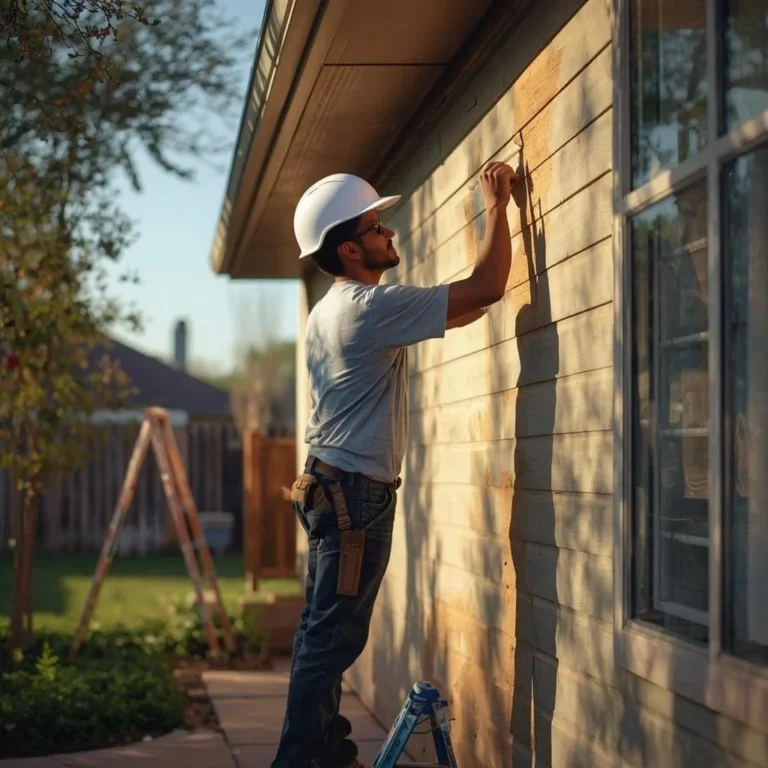
Image Above: The reality of the “quick weekend project.”
2. The Time Vortex: The Myth of the “Weekend Project”
This is where the DIY dream usually dies a slow, painful death. Most homeowners vastly underestimate the time required to paint correctly. They calculate the time it takes to roll the paint, forgetting the other 80% of the job.
The DIY Timeline
-
Friday Night (3-4 hours): Moving heavy furniture away from walls. Removing switch plates and vent covers. Laying down drop cloths. Trying to tape the baseboards perfectly straight (it takes forever). Realizing you forgot spackle and running back to the store.
-
Saturday (8-10 hours): Spackling holes. Waiting for spackle to dry. Sanding spackle. Wiping down walls to remove dust. Priming (if necessary) or cutting in the edges with a brush. Your back already hurts. You start rolling the first coat. It looks streaky. You hope it dries better.
-
Sunday (6-8 hours): The first coat looks patchy. You need a second coat. More cutting in. More rolling. Waiting for paint to dry so you can pull the tape. Pulling the tape and realizing paint bled underneath it onto the trim. Trying to fix the bleed marks.
-
Monday Night (2 hours): Putting outlet covers back on. Trying to shove furniture back into place without scuffing the new walls. Cleaning brushes in the sink (which takes an eternity).
Total DIY Time: 20+ hours of grueling physical labor, spread over a ruined weekend and spilling into the workweek.
The Professional Timeline
A professional crew arrives at 8:00 AM. There are three of them.
-
One person preps and tapes the entire space in two hours.
-
Two people cut in and roll simultaneously.
-
They use commercial-grade fans to speed-dry the first coat over lunch.
-
They apply the second coat in the afternoon.
-
They clean up and are gone by 5:00 PM.
The Time Verdict: What takes a professional crew one day takes a DIYer three days of back-breaking work. If your time is worth money—or if you simply value your weekends—DIY is incredibly expensive.
3. The Finish Factor: The Eye Test
This is the hardest pill to swallow. You spend all that money on supplies, and all that time laboring, and the result is… okay.
The DIY Finish
When you look closely at an amateur paint job, you see the flaws.
-
Roller Marks: Visible streaks where the paint was applied unevenly or the roller was too dry.
-
“Holidays”: Tiny spots where the old color peeks through because the coverage wasn’t uniform.
-
Fuzzy Edges: The line where the wall meets the ceiling or baseboard is wavy or blurry because of poor taping technique or unsteady hands.
-
Texture Issues: Bits of fuzz from a cheap roller cover stuck in the wall paint.
The Professional Finish
Pros don’t just paint; they prepare surfaces. They know how to caulk gaps in trim for a seamless look. They know how to sand between coats. They have the muscle memory to “cut in” a perfectly straight line without needing tape at all.
The result is a velvety, uniform finish that looks solid and substantial. The edges are razor-sharp. It looks high-end because it was applied with high-end skill.
Image Above: The difference in detail is undeniable.
The Quality Verdict: Unless you have significant painting experience, a professional will always achieve a superior, longer-lasting finish.
4. The “Sanity Tax”: Disruption and Stress
Finally, there’s the human element. Painting is disruptive. Your house smells like chemicals. You are living in a construction zone with furniture draped in plastic. You can’t use your kitchen or living room normally.
If you DIY, this disruption lasts for days, sometimes weeks if life gets in the way and you leave the project half-finished. The physical toll—sore shoulders, aching back, stiff neck—is real. And let’s not even mention the friction it causes between partners when the project isn’t going smoothly.
Hiring a pro outsources the stress. You leave for work in the morning, and you come home to a transformed space. The disruption is minimized to the absolute shortest possible time frame.
Conclusion: Making the Right Choice for Your Home
So, is DIY painting ever the right choice?
Yes. If you are painting a small bedroom, a single accent wall, or if you are on an incredibly strict budget where every dollar counts and you have infinite free time, give it a shot.
But if you are looking to paint main living areas, rooms with high ceilings, intricate trim, or your home’s exterior, the DIY route is often a trap. The marginal amount of money you save is rarely worth the lost time, the physical stress, and the inferior finish.
Sometimes, the smartest financial decision isn’t doing it yourself—it’s hiring someone who can do it right the first time.
Ready to Reclaim Your Weekend and Get Flawless Walls?
Don’t spend your precious free time covered in paint, fighting with masking tape, and regretting your choices. Get that stunning, Pinterest-worthy finish without lifting a finger.
Tidy Flamingo offers professional, reliable painting services that transform your home quickly and beautifully. Let us handle the prep, the painting, and the cleanup while you relax.